Material

Strayashades supplies a focused range of shade fabrics engineered for reliability, long service life, and consistent performance in demanding outdoor environments. These materials are selected because they actually hold up not because they look good on a spec sheet.

  • HDPE (high-density polyethylene),
  • PVC (polyvinyl chloride),
  • PVDF (polyvinylidene fluoride),
  • and PTFE (polytetrafluoroethylene)

Where We Source Premium Shade Fabrics

Strayashades partners only with manufacturers whose materials actually hold up under real-world conditions high UV, high tension, and long-term outdoor exposure. No weak imports, no low-grade coatings, no inflated specs.

Trusted by 5,000+ Schools, Councils, and Businesses

Engineered in Australia, the Gale Pacific fabric uses UV-stabilised HDPE. Available in 10 colours, it’s durable and dirt-resistant, making it ideal for larger shade sails in harsh conditions.
The Polyfab HDPE fabric is available in 12 colours and offers exceptional strength and tear resistance. Backed by a 15-year warranty, Polyfab fabrics are perfect for large commercial and municipal applications.
Rainbow Shade fabrics offer an impressive strength-to-weight ratio with an industry warranty of 10 years. Available in 24 colours, the Z16 range is ideal for smaller shade sails, particularly in childcare settings and commercial projects.
The Serge Ferrari fabric comes in 40 colours and is perfect for lightweight, tensioned structures. It has a polyester base with a PVC coating, offers a 15-year warranty, and is used in premium waterproof shade sails.
Monotec fabric is an Australian-made “install and forget” solution. It offers 90–94% UVR block, is available in 14 colours, and features a 10-year warranty, ensuring long-term stability and protection.

The Serge Ferrari fabric comes in 40 colours and is perfect for lightweight, tensioned structures. It has a polyester base with a PVC coating, offers a 15-year warranty, and is used in premium waterproof shade sails.
What We Cover

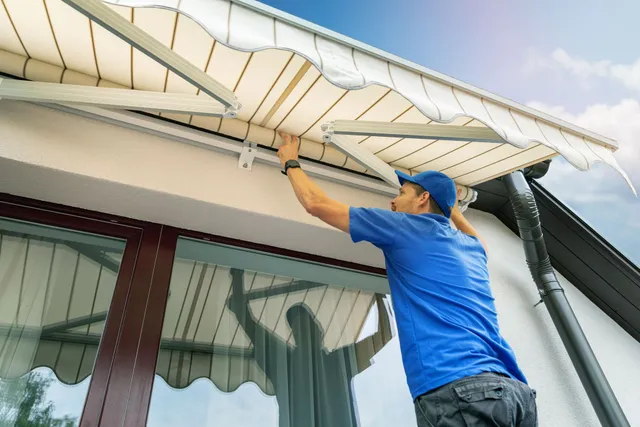
Shade sail re-tensioning

Shade sail re-tensioning

Re-tensioning keeps your shade sail tight, safe, and prevents the fabric from destroying itself over time.

Fabric cleaning and condition checks

Fabric cleaning and condition checks

Fabric cleaning and condition checks stop small issues from turning into expensive damage and keep the sail performing properly.

Hardware replacement

Hardware replacement

Hardware replacement ensures the entire shade system stays secure and prevents weak fittings from failing when the weather hits.

Structural inspections for steel and timber

Structural inspections for steel and timber

Structural inspections catch weakness in your steel or timber early, so the whole setup doesn’t fail under load.

Minor repairs and adjustments

Minor repairs and adjustments

Minor repairs and adjustments stop small faults from snowballing into major structural or fabric failures.

Post-installation service for civil works

Post-installation service for civil works

Post-installation service for civil works keeps the structure running cleanly by fixing early wear before it turns into costly headaches.

Why Material Quality Matters

Cheap fabrics and hardware don’t fail slowly — they fail suddenly. UV, tension, wind load, and heat destroy low-grade materials fast. When the material isn’t engineered for real stress, you get sagging, tearing, warping, and structural issues long before the structure reaches its expected lifespan.

We cut that risk out. Using high-performance HDPE, PVC, PVDF, PTFE, and heavy-duty structural components means your shade system stays tight, stable, and reliable for years — not months. Stronger materials aren’t just “better”; they reduce failures, reduce safety risks, and reduce long-term costs.

Why Join Us

Designed for Harsh Conditions

Revolutionary paradigms before enabled interfaces dynamically transition technically
sound paradigms with cutting-edge initiatives.

Zero-Compromise Quality

Most shade fabrics look fine at installation and then fall apart under UV, tension, or weather cycles. We don’t touch that garbage. Every material we use HDPE, PVC, PVDF, PTFE is selected for verified tensile strength, UV stability, and long-term durability, not catalogue hype.

Tested for Harsh Conditions

If a fabric can’t handle heat, wind, and year-round exposure, it doesn’t make the cut. Our materials are stress-tested for stretch resistance, structural stability, fire performance, and long-term colour retention. No assumptions. Only proven performance.

Engineer-Approved

Nothing here is “close enough” or “should work.” Our fabrics and structural components are matched to engineering loads, span lengths, and tension requirements. You get materials that perform under real-world forces not materials chosen to cut costs.

Long-Term Safety

Cheap materials sag, tear, and eventually become hazards. Our selections are compliant with commercial safety standards, fire ratings, and UV protection benchmarks. That means fewer failures, fewer risks, fewer headaches later.

Trusted by the best companies in the world

Call us